



Colonial Subjects and Transnational Solidarity: Dr. Andrew Bellisari Visits the Asia Center
On November 6, historian Dr. Andrew Bellisari spent a twelve-hour day with the Asia Center community, leading a professional development workshop, presenting his research on North and West African soldiers in the French army during the First Indochina War, and joining a community conversation with the AfroAsia Working Group. Graduate student Naomi Fastovsky reports on a visit that connected many corners of the Center’s community.
In the wake of the Second World War, the French empire stretched from the Atlantic coast of Africa all the way to the Pacific coast of Asia. Far from the common trope of a weak nation recovering from the fascist Vichy regime, the post-WWII French were, as Dr. Andrew Bellisari noted in his talk on Friday, November 6, a formidable imperial power, fighting on multiple fronts across the world with, against, and through its colonial subjects. L’Union Française, flying its convoluted promise of Liberté, Égalité, Fraternité, was not nearly the binary of colonizer and colonized that we might easily imagine. Indeed, from the perspective of the colonial subject—that space of opportunity and threat for the French military apparatus—all sorts of nuances of identity, power, solidarity, and violence emerge. It is from this angle that Dr. Bellisari introduced us to his most recent work on African—North and West—soldiers in the colonial French army during the First Indochina War in the 1940s–50s. In this extraordinary nexus of transnational connection, Northern Vietnamese anti-imperial communists mapped their own hopes and dreams of transnational solidarity onto an assumed trope of brethren colonial subjects from across the Indian Ocean. In doing so, they propped up African soldiers in the French army as obvious sites of transnational solidarity against the French colonizer, even if those soldiers needed paternal guidance from a firm but benevolent Vietnamese hand. For their part, the few African soldiers who did desert were often disappointed in their own dreams of anti-imperial solidarity, finding stigma and frustration where they would have hoped for understanding and equality.
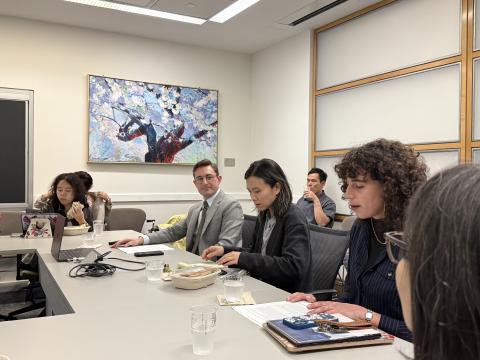
Dr. Bellisari, himself a graduate of the master’s program at Harvard Kennedy School, a member of the US military, a founding faculty member of Fulbright University Vietnam, and a current professor of history at Purdue University, is exactly the man to speak on these issues to the Harvard Asia Center community. In a nearly non-stop, 12-hour day, Dr. Bellisari began with a professional development workshop in the morning with the Graduate Southeast Asia Workshop, offering advice on topics ranging from time management, to publishing, to applying for jobs in and out of the academy. Running straight to his talk with the Transnational Asia Seminar Series, Dr. Bellisari offered a fantastic overview of the above cutting-edge research (published in Itinerario), provoking stimulating conversation from all members of the Asia Center community, including students, faculty, and visiting scholars. As if that were not already enough, Dr. Bellisari then joined a community conversation with the AfroAsia Working Group on the very same research—a real treat for graduate students and early-career scholars interested in Africa-Asia encounters.
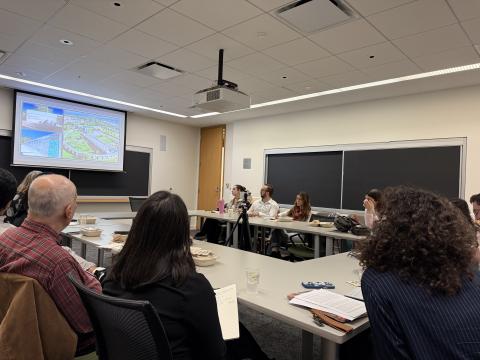
While truly a marathon for Dr. Bellisari, these three events had the added benefit of sewing together many of the disparate pieces of the Asia Center’s various initiatives and the corners of its vast community into an ongoing and meaningful conversation that we hope can be a jumping-off point for similar intellectual production in the future.
In particular, Dr. Bellisari deserves an immense amount of credit for his vocal and passionate allyship with graduate student workers at Harvard, particularly in our own moment of emancipatory action of solidarity in the Harvard Graduate Student Union (HGSU) strikes. Himself a former HGSU organizer, Dr. Bellisari recognized that all of these events that add so much to the Asia Center community were organized by graduate students alongside the administration of the Asia Center (thank you, Tenzin!). A labor of many months of coordination, Dr. Bellisari’s long-awaited visit to Harvard was a resounding success. We hope that his research continues to stimulate similar initiatives in the Asia Center and beyond on the ever-shifting and power-laden transnational circulations characterizing Asia in the world.