



"I can't believe we got an American to sell rice boxes!" : Sarah Bellagat '27 Shares Unexpected and Crucial Benefits of Research Travel in Indonesia
In summer 2026, Sarah Bellagat '27 traveled to Jakarta to conduct research on the political salience of the Chinese ethnic minority in there, focusing on the political organization and capability of the Chinese-Indonesian community itself, and the positions of and acknowledgments by Native Indonesian politicians toward the Chinese-Indonesian community. A recipient of an Asia Center Summer Research Grant, Sarah discusses with the Asia Center the joys and benefits of research travel.
Tell us a bit about your research interests, how you arrived at them, and their connection to Asia. I am broadly interested in ethnic politics as it relates to minority communities within non-Western contexts, looking at the ways in which minority groups impact and are impacted by their nation's political establishment. Since the beginning, I have always been more interested in studying politics in non-US and non-Western nations. I took a number of incredible comparative classes in the Department of Government that really solidified this interest. "GOV 1146: Elections, Parties, and Representation in the Developing World was especially impactful for me." I chose to focus on Asia, specifically Southeast Asia, due to my own connection with the region and a desire to engage in a growing area of research that has not received as much attention in the past. Southeast Asia is such a rich, complex region that is growing at an incredible pace, and its regional character is so drastically different from even its neighbors in East Asia. In addition, many Southeast Asian nations have only recently become democracies and are in various stages of political development. Altogether, this creates a deeply intriguing research context that can lend itself to all kinds of new insights on building democratic institutions. And on top of all that, the food is delicious!
Describe the specific research project(s) you worked on while in Asia on your grant.
While in Indonesia, I conducted research for my senior thesis in the Department of Government. My thesis focuses on the present and historical political life of the ethnic Chinese minority in Indonesia, exploring how historic exposure to communal violence has long-lasting repercussions on contemporary voter preferences for political inclusion. Though making up a very small proportion of the nation’s nearly three-hundred-million population, Chinese-Indonesians constitute one of the most significant overseas Chinese communities, estimated at several million people. Over the course of two months, I interviewed bureaucrats, elected officials, journalists, academics, community leaders, and everyday voters to illustrate the contemporary political position of Chinese-Indonesians and understand how historical memory has impacted voters' political preferences.
What led you to pursue research overseas?
I made the decision to focus on Indonesia after reflecting on my own lived experiences and those of my family members--in my mind, their real, personal histories became inseparable from so much of the theoretical and academic work I had read in my numerous Government classes. Once I decided to focus on Indonesia for my senior thesis, I knew that I needed to pursue research overseas in order to truly understand my question and subsequent answer. The human-centric, deeply personal nature of the topics I investigated in my thesis required a level of care and sensitivity. For people to entrust me with their experiences, I needed to speak with them face-to-face and offer them assurances that I would do their stories justice.
What kinds of connections did you make with institutions, practitioners, faculty members, and others? How were these connections established and how did they impact your research? Given the bottom-up focus of my project, more than any other group, I made connections with everyday voters across a wide variety of backgrounds. These connections were the heart and soul of my research, and it is thanks to the kindness of my interviewees that I was able to make so much progress. I have gone to Jakarta nearly every summer to visit family since I was a baby, so I utilized my existing network in Indonesia to make these connections. Beyond voters, I also connected extensively with journalists, politicians, and cultural organizations, who were extremely helpful in the earlier stages of my time in Indonesia. Their extensive knowledge, especially given that they live and work in Indonesia, provided me with important political and historical context that served as the foundation for the rest of my research that summer. In many ways, these early interviews pointed me in the right direction, ultimately enabling my project to become what it is today.
What aspect of your research would have been difficult (or impossible) without travel to your country(ies) of interest? Travel was critical to doing my research. My research focuses on how historical trauma leaves long-term political impacts on minority communities -- a topic that can be particularly sensitive, especially for interviewees who are recalling their own lived experiences to me. I asked difficult questions that my interviewees answered in great detail and transparency. It would not have been possible for me to extend the proper care to my interviewees and, in return, reach a level of honesty with them had I not spoken with them in person. Forming a personal connection was critical, and I am so thankful to all my interviewees for opening their hearts to me. In addition to this, I did not initially arrive in Indonesia with this exact idea in mind; it was only through my first extensive interviews that I came to start thinking of historical trauma as a critical variable in my research. Without speaking to people on the ground, I would not have made this discovery, and my thesis would likely be something totally different compared to what it is today.
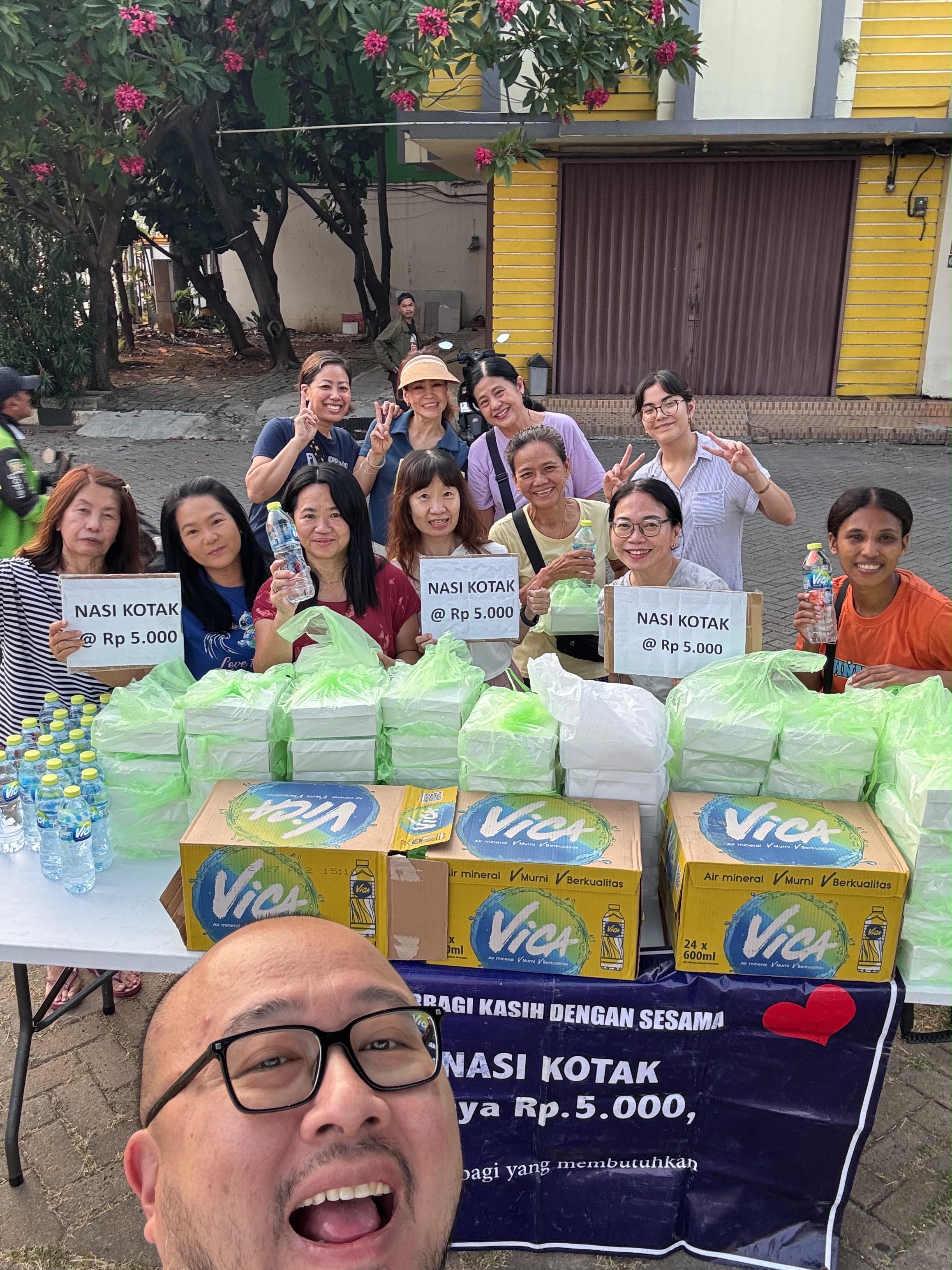
Share an example or two about an unexpected finding, an unusual or moving experience, or an aha moment that was made possible because of travel. After my first week in Indonesia, nearly the entirety of my mom's family knew exactly why I was in town, and they were all very eager to help me source interviewees. One of my aunts very kindly offered to take me to her church's volunteer group in the hopes of doing some interviews while they were preparing for the month's volunteer project. This was a group of about a dozen men and women who met up each month to serve the community and raise donations for the church. I eagerly agreed, and she took me to one of her fellow churchgoer's homes. When I arrived there, I very quickly realized I wouldn't be getting interviews any time soon: that month's volunteer project was selling highly-discounted nasi kotak -- single-serve, homecooked boxes of rice, meat, and side dishes -- and the living room and kitchen floors were covered with half-finished boxes as six women ran around trying to get everything ready. So, I did the only thing I could think to do: I jumped in and got to work! As more members of the group arrived fashionably late, we finally finished putting all the boxes together -- but the work was only halfway done. I spent the next two hours with them on the side of the road, flagging down motorists and handing out rice boxes, with the church group joking the whole time: "I can't believe we got an American to sell rice boxes!" This turned out to be an incredible way to break the ice, and I ended up getting eight interviews after the last rice box was sold. I had never done something like this before, even after all my years of visiting Indonesia, and I actually found the hustle and bustle of everything kind of fun!
Overall, how did your research travel impact your project (or more broadly, your life)? What new doors, if any, were opened? What obstacles, if any, were revealed? My research travel was pivotal to my project -- it would have been almost impossible to get the data I needed without it! In addition, the things I uncovered from my first exploratory interviews totally changed the trajectory of my project. I overhauled many previous ideas when my experiences on the ground made it clear to me that what I thought was going on wasn't really going on. More importantly, this research travel gave me a whole new insight into a place that I've considered my second home. My mom, aunts, uncles, and grandparents have told me stories since I was young about what life was like for them. Being able to look at my own family’s lived experiences through this new, academic lens has been so incredibly rewarding. In addition, this research gave me the opportunity to return to Jakarta for what will likely be the last time for quite a while -- post-graduate life will not afford me the lengthy breaks necessary for traveling across the world. Many of my peers sought out internships and work experience this summer, and an equally large number of them have accepted job offers from these experiences. But for me, being able to travel and research has been the most impactful thing I could have done. I will never forget how I spent my last summer of college, and I'll always be grateful for getting to do the things I did!
Learn more about Asia Center undergraduate summer research grants here.
Photo: Sarah Bellagat (back row, right) with interviewees