



Strategy and Stewardship: A Mid-Fellowship Conversation with Kuniharu Kakihara
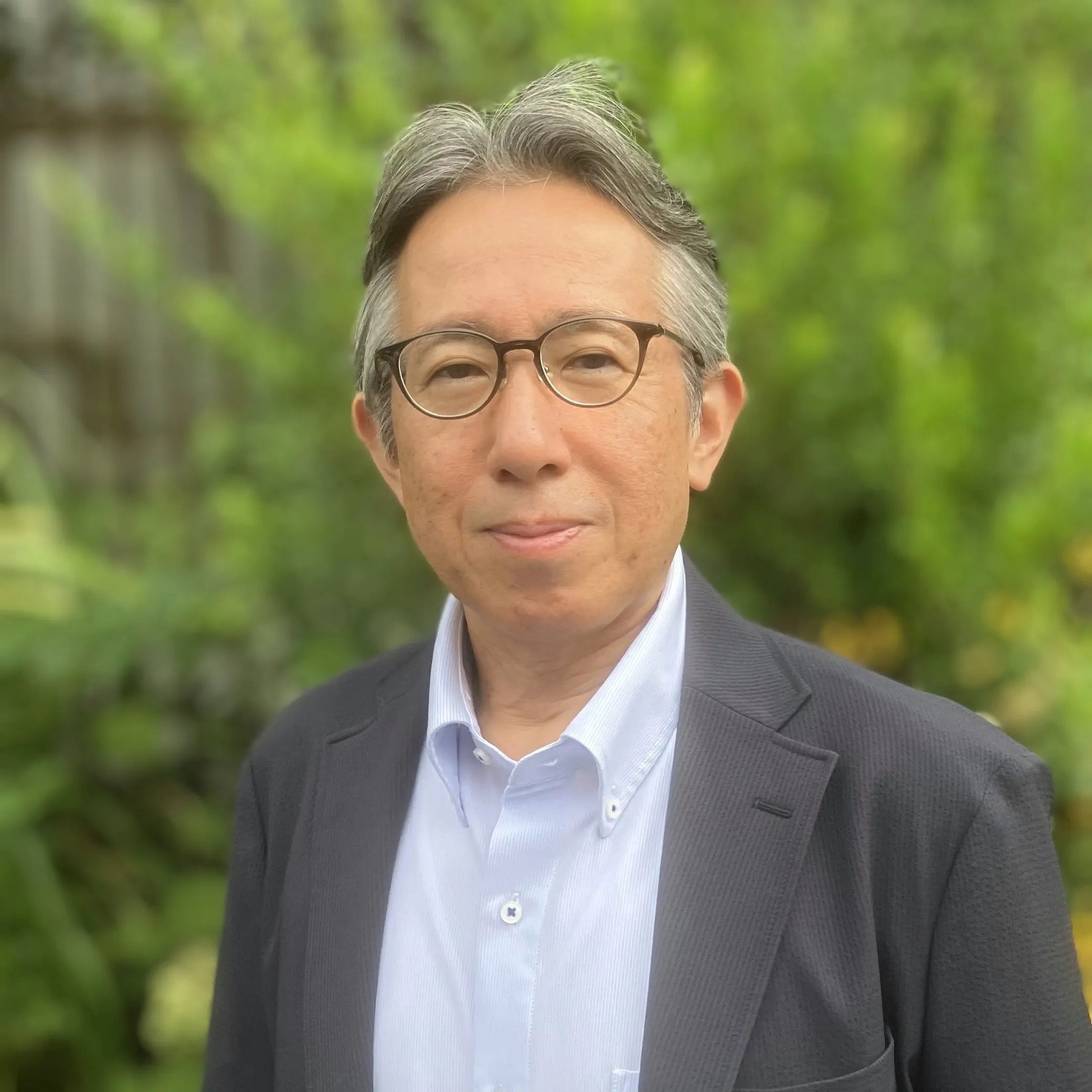
Kuniharu Kakihara is a Fellow at the Harvard University Asia Center and a researcher at Japan’s National Security Institute. Currently midway through a two-year fellowship that began in July 2025, he focuses on the intersection of academic theory and national defense. In this interview, Kakihara reflects on the evolving U.S.–Japan alliance, the rigors of Harvard life, and the philosophy of leadership that guides his work.
Q. You already hold leadership roles at Fujitsu’s National Security Institute and the Institute of Geoeconomics. How does the “deep dive” of a two-year academic residency at Harvard differ from the fast-paced, output-driven world of corporate and policy think tanks? What has this change of pace allowed you to explore that wasn't possible before?
First of all, I would like to express my gratitude to everyone who enabled me to spend two years at Harvard engaged in sustained, in-depth academic work. That said, the pace and results-oriented culture of Japanese corporations and policy think tanks have not changed, even during my time abroad. I continue to participate online in research meetings in Japan, and my home institution’s National Security Institute has required me to contribute two articles to its internal quarterly journal. The Geoeconomic Institute has also requested analytical essays, and I regularly contribute op-eds as well.
At Harvard, I have been permitted to audit two courses each semester. The opportunity to attend world-class lectures and take part in seminars has been a tremendous privilege, offering numerous insights that directly inform my research. At the same time, however, I complete the same assignments as enrolled students—readings, class preparation, and written responses to discussion questions. In many ways, the workload is reminiscent of my days as a student at the National Defense University nearly eighteen years ago.
In response to your question, rather than enjoying a slower, more leisurely pace of inquiry, I have found myself managing a demanding schedule that spans three simultaneous research commitments. Yet precisely because I have been immersed in such an intense intellectual environment—surrounded by a wealth of information, diverse knowledge, and multilayered perspectives—I have been able to deepen my investigation into questions that have long preoccupied me. The rigor of this environment has enabled me to synthesize the insights gained at Harvard and publish them in Japanese through my company’s platforms as well as the Geoeconomic Institute’s media channels.
Q. Your current research focuses on “Theories of Victory” across China, Japan, and Taiwan. In an era where conflict is often indirect or occurs in the “gray zone,” why is it vital for scholars and the public to understand how different nations define an actual strategic “win”?
Historically, major powers often initiate wars under the false assumption that they can achieve a quick and easy victory; Russia’s invasion of Ukraine is a quintessential example. For small and medium-sized states located on the periphery of great powers and exposed to persistent coercion, the most critical requirement for preventing aggression is to deny the adversary any perception that victory would be simple or low-cost. Understanding a great power’s “theory of victory”—the logic by which it believes it can prevail—is therefore indispensable for shaping effective deterrence and ensuring that such a theory cannot be realized. Naturally, it is difficult for smaller states to achieve this alone; consequently, the involvement of an allied major power, and by extension the credibility of alliance-based deterrence, becomes essential.
As your question notes, in an era where conflicts increasingly emerge from the gray zone, information warfare and cognitive warfare are waged continuously even in peacetime. These efforts often target alliance cohesion, seeking to create divisions or sow doubt regarding the willingness of major power allies to intervene. Political leaders’ narratives during crises also play a crucial role, as they can significantly influence an adversary’s perceptions. Great care must therefore be taken to avoid feeding misperceptions that might invite escalation.
At the same time, we must also consider scenarios in which a state suffers an unwanted invasion, as in the case of Ukraine. In such circumstances, it becomes vital for allies to share a common understanding of what constitutes an acceptable “strategic victory”: how to terminate the conflict, how to minimize human and material costs, and how to ensure a durable and stable postwar environment that does not sow the seeds of future conflict. History teaches us that once a limited regional war erupts in a geopolitically sensitive area, there is a high probability that military ceasefire lines will harden into de facto political boundaries, creating long-term division. For this reason alone, preventing the outbreak of conflict—through robust deterrence—is paramount.
Against this backdrop, my research over the past year has focused on two interconnected themes: the strategic intent behind China’s ongoing nuclear expansion and the redesign of U.S. nuclear deterrence strategy in response to these developments.
Q. Harvard is a crossroads for global thinkers. Have your conversations with students, faculty, or scholars from outside the traditional security sphere, such as those in ethics, history, or economics, given you a new perspective on how you view Japanese national security?
I am constantly gaining valuable insights from scholars across a wide range of disciplines. In particular, understanding contemporary interstate relations requires close attention to geoeconomic factors, such as economic structures, patterns of interdependence, and supply-chain dynamics. Likewise, to comprehend the thinking of those who support the Trump administration within the United States—a critical allied power—perspectives grounded in history and religious ethics are indispensable. Dialogues with scholars in these adjacent fields have broadened my analytical scope and enriched my understanding of Japan’s national security environment.
Q. In 2015, you authored a significant paper on "resilient response" and counterbalancing. Looking at the geopolitical landscape today in 2026, which aspects of that resilience have become most critical, and which have been most challenged by the rapid evolution of defense technology?
When I wrote that paper in 2015, China’s nuclear arsenal was still relatively limited in scale. Nevertheless, I argued that a “stability–instability paradox” between the United States and China could eventually emerge, and that Japan would need to develop its own conventional “counterbalance” capabilities—an autonomous denial posture—to prevent a regional conflict under conditions of U.S.–China strategic parity. At the time, this assessment was met with considerable skepticism. Many believed that the United States would not hesitate to intervene and that any crisis would naturally be managed through the Japan–U.S. alliance from the outset.
In 2026, however, the strategic environment has changed markedly. The Trump administration’s America First—oriented strategic approach has placed greater emphasis on allied burden-sharing, heightening the importance of Japan developing sustainable, independent denial capabilities. At the same time, China has rapidly expanded military capabilities that exceed Japan’s current ballistic-missile defenses—including hypersonic weapons and low-yield nuclear systems—and has begun deploying large numbers of unmanned systems. These advances pose challenges in domains that Japan’s traditional defense posture was not designed to cover, making it urgent to build new capabilities that can effectively respond to these emerging threats.
Q. National security is often discussed in terms of "assets" and "systems," yet your work involves deep human leadership. How do you balance the "cold logic" of strategic theory with the human realities of diplomacy and the practicalities of leading large organizations?
The essence of strategy lies in its execution—in the dynamic interaction with an adversary. No matter how sophisticated our strategic theories or operational plans may be on paper, they hold little value unless they can be carried out effectively. Adversaries will always seek to outmaneuver or deceive each other; for this reason, the execution of strategy is ultimately a contest of wills.
Strategic leaders, therefore, must constantly question assumptions and challenge conventional wisdom. They must think broadly and avoid preconceptions about what an adversary might do, preparing a wide range of contingencies and alternative courses of action in advance. In moments of crisis—at the precise “now” when a decision must be made—leaders must act decisively and translate judgment into action. In this sense, the execution of strategy is an art grounded in the commander’s intuition.
Cultivating that intuition requires repeated experience in demanding, high-pressure operational environments. Such experiences strengthen a commander’s resolve—what in Japanese we call tanryoku, or fortitude. Command is a practical discipline that demands lifelong study. Knowledge drawn from a wide variety of fields enriches judgment, and leading subordinates effectively requires a deliberate effort to strengthen one’s own human qualities.
Even as one rises in rank, it is essential never to become complacent. Maintaining humility—listening sincerely to others and avoiding arrogance—is indispensable. In Japan, we have a proverb: “Minoru hodo, kôbe notareru inaho kana,” meaning “the more the rice plant ripens, the lower its head bows.” I believe deeply in this ethic: that leadership requires acting for the benefit of others, cultivating virtue, and making steady daily efforts toward self-improvement.
Q. Beyond the archives and seminars, what has been a highlight of your residency in Cambridge so far? Is there a particular local experience that has stood out to you during your first year in residence?
Beyond archival research and seminar participation, several experiences in Cambridge and the Greater Boston area left a particularly strong impression on me during my first year. One of the most memorable was attending a concert by Midori Goto, a Japanese violinist based in Boston, at Symphony Hall. Her performance was deeply moving and unforgettable.
I also had opportunities to enjoy a wide range of cultural events, including performances by the Boston Ballet and various musicals. The “Festival of Lessons and Carols” held on Christmas Eve at Park Street Church was especially inspiring, as was the baroque concert at Sanders Theatre on New Year’s Day. These occasions allowed me to immerse myself in the region’s rich artistic and cultural traditions, and each experience left a lasting impression on me.